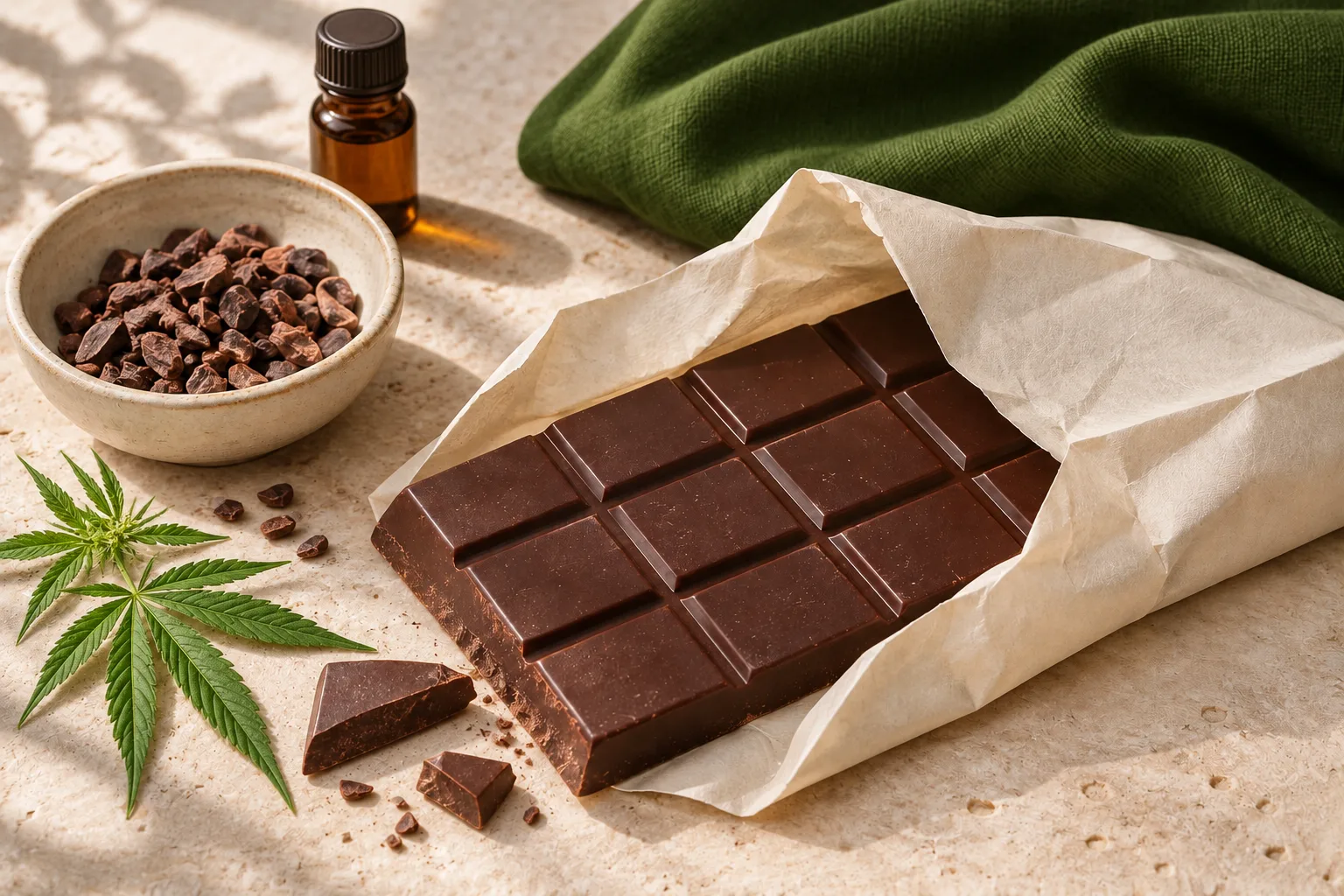
Start with the chocolate
Think about what you would look for in an ordinary bar: a pronounced cocoa flavour, a softer milk recipe, a little salt or a particular texture. Those preferences give the comparison a useful starting point. A botanical description should still leave you knowing what the chocolate is intended to taste like.
A flavoured bar may include fillings, crisp pieces or other additions as well as its chocolate base. Read the whole description and ingredient list. Photographs can suggest scale and texture, but they cannot establish the recipe or the amount of CBD. The written particulars need to stand on their own.
Keep the three quantities separate
Chocolate weight, cocoa percentage and CBD content describe different things. Grams tell you how much chocolate is in the pack. A cocoa percentage describes part of its recipe. Milligrams of CBD describe the stated amount of that ingredient. A larger bar or a higher cocoa figure does not, by itself, mean more CBD.
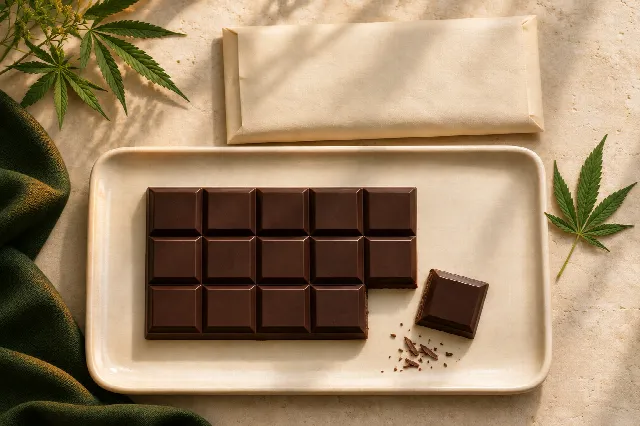
Look for the CBD amount for the complete bar and for a clearly identified piece. “Per serving” is only useful when the serving is explained. It might mean one square, several squares or a weight in grams. Do not assume that the lines moulded into a bar are the manufacturer’s measured serving units.
These distinctions also make price comparisons more useful. Set pack price, pack weight and stated CBD content alongside one another. You may prefer a particular recipe or smaller pack even when another offers more chocolate for the same money. There is no need to reduce that choice to a single strength ranking.
Read the recipe before the reassurance
Check the complete ingredient list, the highlighted allergens and any precautionary allergen wording. UK consumer guidance explains that relevant allergens must be identified in prepacked food ingredients. A dark appearance, botanical styling or vegan description is not a substitute for that information.
If a retailer has provided only a flavour name and front-of-pack image, ask for the full label before deciding. This is especially useful for caramel, biscuit, nut or filled editions, where a short name tells you relatively little about the complete recipe. Confirm the exact variant rather than borrowing information from a neighbouring product.
Reference: GOV.UK: understanding allergen labelling (opens in a new tab)
Ask which product the evidence describes
A certificate showing an extract’s composition does not necessarily describe the chocolate made with it. Look for the finished product’s identity, the batch reference and an explanation of what was tested. If the document belongs to another flavour or an earlier formulation, the seller should explain the connection.
Regulatory status is another question to check separately. A laboratory result and a product-status record serve different purposes. Our central UK guidance explains that distinction; the useful buying habit is to match any document to the exact product, without treating a general badge as a complete answer.
Make room for the practical details
Before buying, check the storage instructions, date information and what the seller says about delivery. Consider whether you can keep an opened bar in its original, clearly identified packaging. A box of loose, unlabelled squares makes it harder to retain the ingredient, batch and quantity information you chose so carefully.
A chocolate bar can look like an ordinary snack. Keep it distinguishable from other chocolate and away from children. If choosing it as a gift, leave the original label with it and check the recipient’s preferences first. An attractive wrapper cannot answer questions about their dietary requirements or suitability for CBD.
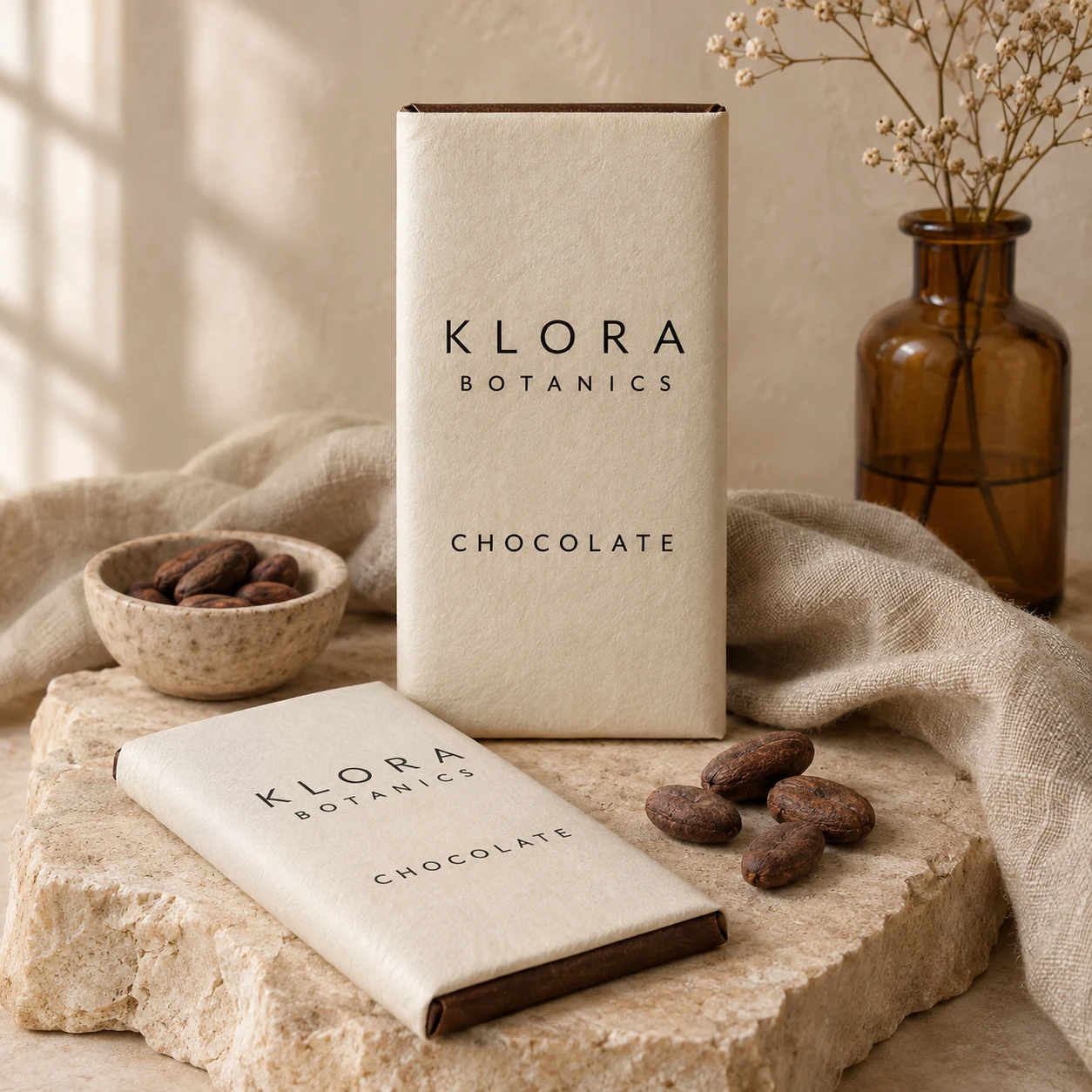
Chocolate in the Klora own-label range
Our own-label preview includes Dark Cacao No. 70 and Sea Salt Caramel concepts. The proposed formats are 100 g bars divided into 20 squares, with 5 mg CBD proposed for each square. These are development particulars; final recipes, labels and supporting records still need confirmation.
Use the preview to compare the intended flavours and format. The final buying decision belongs with the completed product information. A whole bar is not a daily serving, and chocolate counts alongside other CBD foods and drinks rather than creating a separate allowance.
Primary references
Read the original guidance
General information, not personalised medical or legal advice. Product and regulatory details can change. Read the exact product label and current source guidance.