Find the unit before reading the number
Begin with the words around the CBD figure. Does it refer to one square, one portion, 100 g or the entire bar? A number without its unit can look reassuringly precise while leaving the most useful question unanswered. Read the front and back of the packaging together.
Then identify what a portion means on that particular label. A portion could be a stated weight rather than a moulded square. Some bars have unequal segments or a different number of pieces from other bars of the same weight. Compare the actual descriptions rather than assuming that a square is a standard measure.
A worked example, with a clear boundary
Imagine a hypothetical 100 g bar labelled as containing 80 mg CBD across 20 equal portions. Dividing the stated 80 mg total by 20 gives 4 mg CBD per portion. The same pack would contain 5 g of chocolate per portion. The 4 mg CBD and 5 g chocolate figures describe different quantities and must keep their units.
That calculation checks whether the figures are consistent. It does not demonstrate that the CBD is evenly distributed through the real bar. It also cannot establish the accuracy of the declared total. Those are matters for the manufacturer’s formulation controls and appropriate product evidence, rather than a calculator.
The example is not a suggested portion or a Klora specification. If a label gives a different amount per piece from the one you calculate, do not choose whichever looks preferable. Ask the seller to clarify the discrepancy before relying on either figure.
A broken piece is not automatically a measured piece
Cutting a square in half may look like an easy way to halve its CBD amount. Appearance alone cannot verify that result. Even a precisely weighed piece depends on the product being consistently formulated and on the declared content being reliable. Do not use a decorative score line as evidence of those properties.
For a bar that has melted, broken or lost its original portion shape, seek the manufacturer’s advice. Guessing from a photograph or the number of fragments leaves the uncertainty unresolved. Keep the wrapper and batch reference so that you can ask about the actual product in front of you.
Count CBD across foods and drinks
The Food Standards Agency advises healthy adults to limit CBD from food to 10 mg a day. That is a combined amount across food formats, not a separate allowance for each bar, bottle or jar. It is precautionary guidance, not a personal target.
For another hypothetical calculation, a labelled 4 mg chocolate portion and a drink labelled with 3 mg CBD contribute 7 mg in total. This demonstrates addition only; it is not a recommendation to combine those products. Include any other CBD food used that day when checking the overall figure.
Write down the labelled amount and the quantity actually consumed if you find it difficult to keep track. A simple note is more useful than recalling how many products you opened. Where the amount in a prepared drink is unknown, record that uncertainty rather than entering zero.
Reference: Food Standards Agency: CBD consumer advice (opens in a new tab)
Keep nutrition portions separate
The nutrition panel may give values per 100 g and sometimes per portion. Check that the nutrition portion matches the portion used for the CBD figure before comparing them. The NHS notes that a manufacturer’s portion can differ from the amount someone actually eats.
For instance, a chocolate pack might show nutritional values for several squares while listing CBD for one. Neither statement is necessarily contradictory, but using them together without reading the units creates a misleading picture. A quick note of the two portion sizes can make the distinction much easier to see.
Read the final label for the final bar
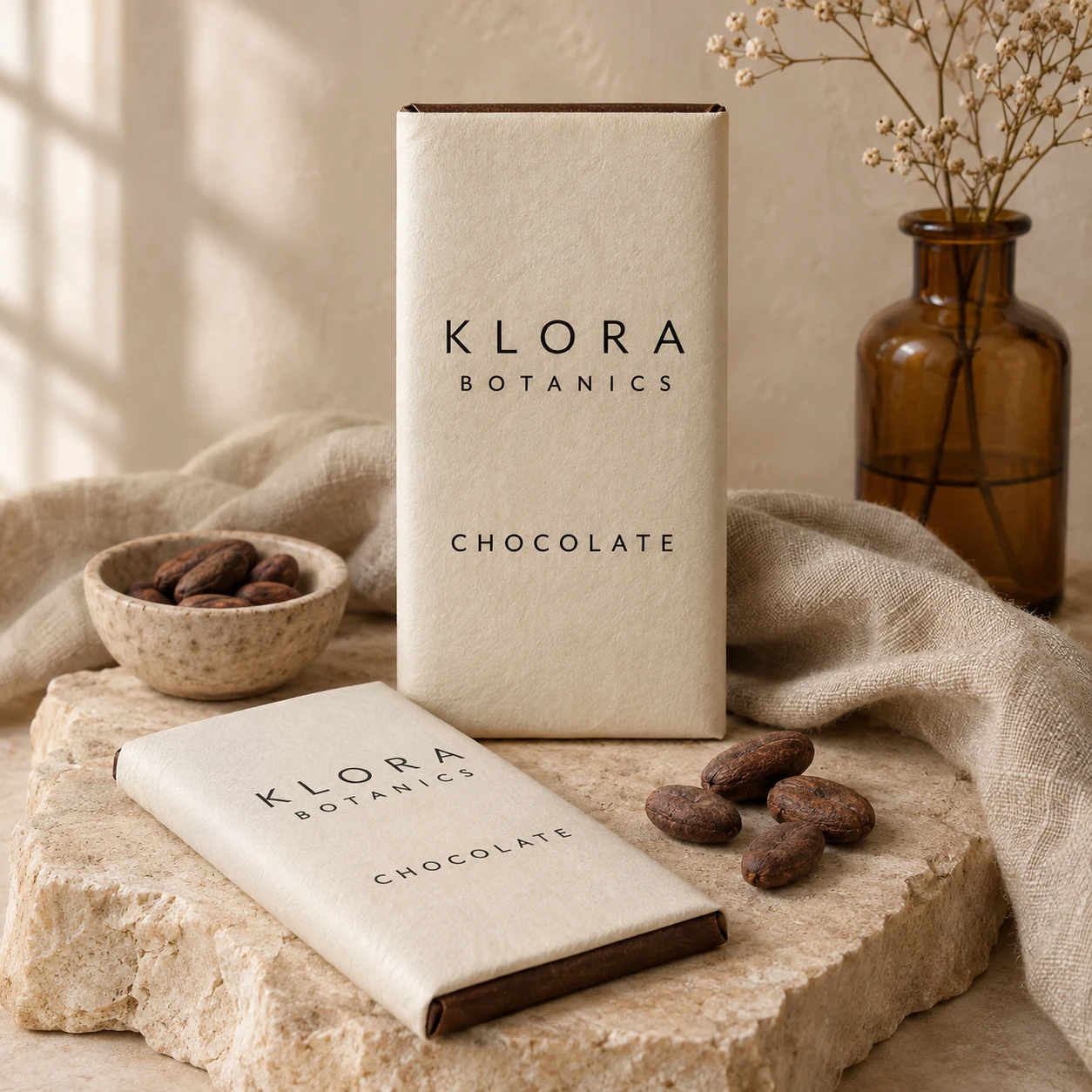
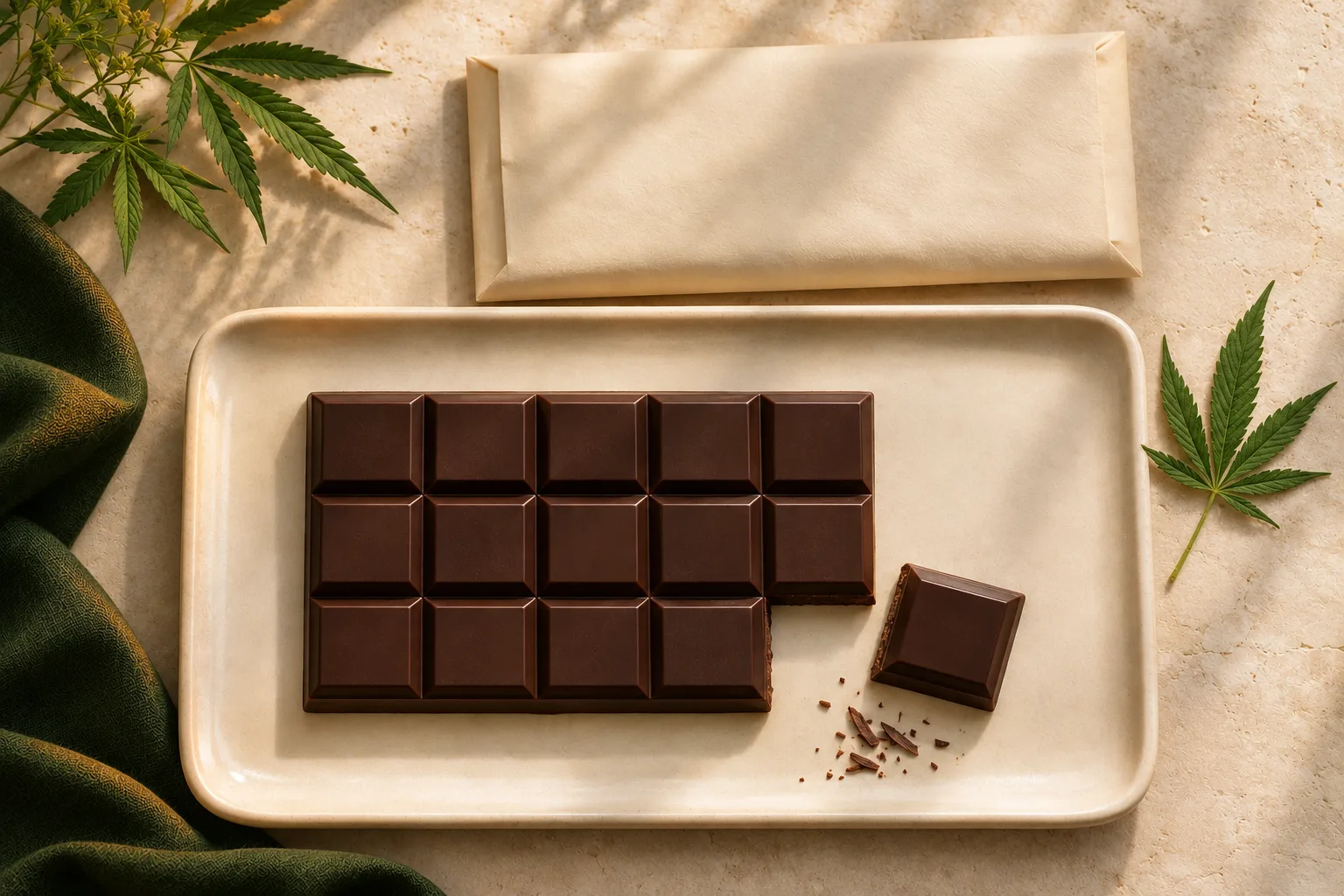
The Klora chocolate concepts currently describe 20 squares with a proposed 5 mg CBD per square. That design information is visible so the intended format is clear. It does not replace confirmation of the final formula, its distribution through the bar or the finished-product records.
When comparing any chocolate, look for a complete chain of particulars: the exact bar, its labelled portion, the CBD amount for that portion and the relevant supporting evidence. Keep those details with the product after opening. A small square deserves a clear description.
Primary references
Read the original guidance
General information, not personalised medical or legal advice. Product and regulatory details can change. Read the exact product label and current source guidance.