Decide what you want to learn
Start with a practical question. Would you prefer handling an oil or a fixed piece? Are you comparing two flavours, or a face oil with a balm? Keeping the question specific helps you avoid buying several products simply because the collection sounds like an essential starting point.
You do not need a set to begin reading labels. A single product page may show everything you want to compare. If the proposed contents are unfamiliar, use the individual format guides first and return to the bundle once you understand what each item contributes.
Identify the exact contents
List every component by product name, size and variant. A phrase such as two oils leaves important details open if several flavours or concentrations exist. A photograph can show the intended collection, but the written contents list should tell you precisely what the proposed purchase includes.
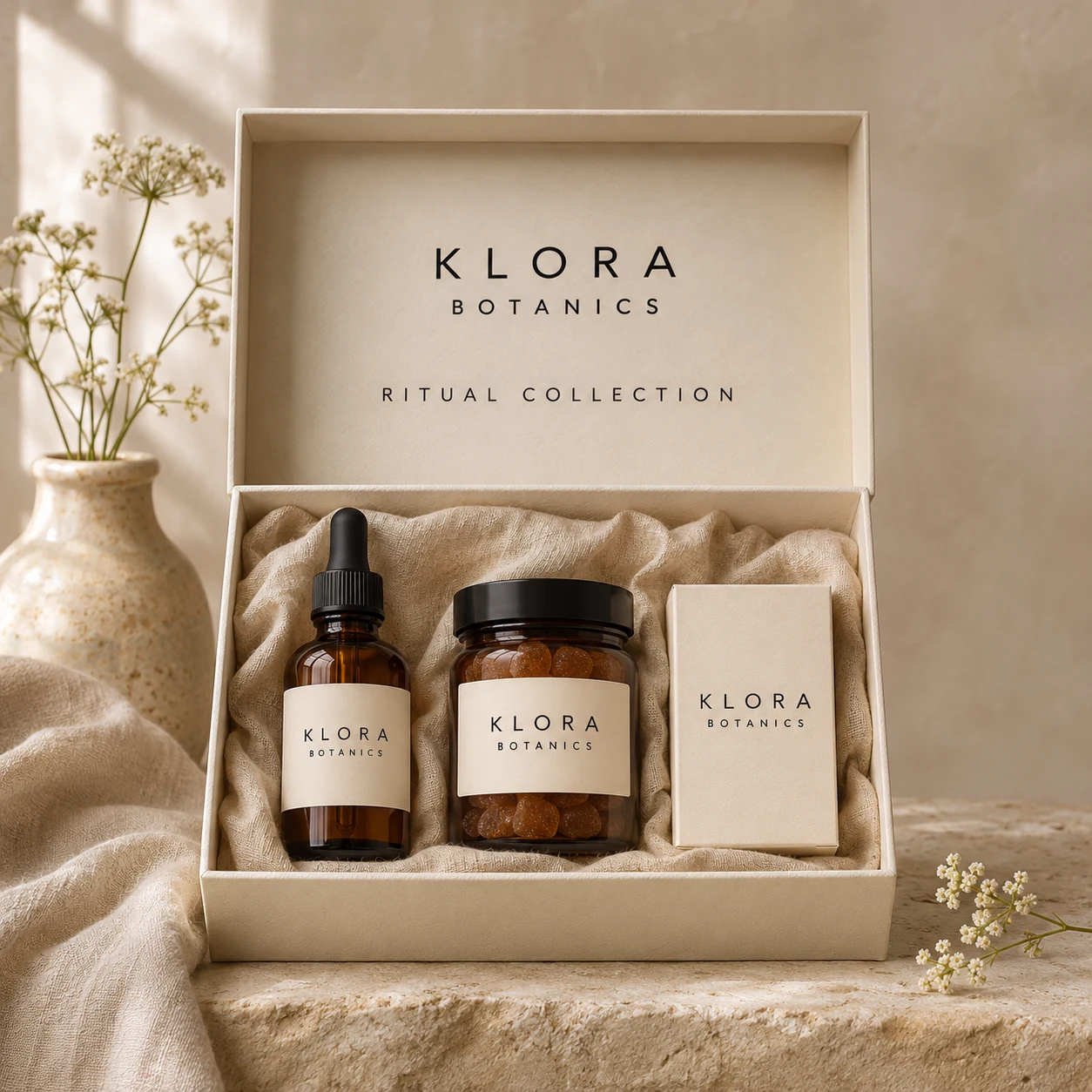
The Newcomer Edit in Klora’s own-label preview pairs a 30 ml Botanical CBD Drops bottle at a proposed 500 mg total with 30 Blackcurrant Botanicals gummies at a proposed 150 mg total. These figures identify two different packs. They are not a combined serving, and the concept remains subject to final specifications and product records.
Check that smaller means fully explained
A miniature or sample format still needs clear information. Check where its ingredient list, quantity, directions and storage details are supplied. If part of that information sits on the outer box, keep it with the item rather than separating the contents into unlabelled containers.
Do not assume that a product is less concentrated because its bottle is smaller. Pack size and concentration describe different things. Equally, a product included in a starter set is not automatically a suitable first choice for every adult. Read the central guidance before deciding whether CBD is appropriate for you.
Keep one record for each item
For comparison, note the format, full ingredients, pack quantity and CBD amount using the units shown. Leave a blank where a detail is absent. An unanswered question is useful information: it tells you what to ask before judging the set by its price or design.
Read any available supporting records alongside the correct product. A document for one component does not describe every item in the box. If a bundle contains two concentrations of the same oil, the written record should still distinguish the versions rather than relying on a shared name.
- What is each item intended for?
- Are the recipe and relevant warnings complete?
- What does each quantity describe?
- Can I identify the exact variant and any available batch record?
- Which details still need confirmation?
Do not turn discovery into a schedule
A set can be arranged by flavour or format without suggesting that every food item should be consumed together. Read each label and keep the overall picture in view. A morning-and-evening theme should not be treated as a personalised plan simply because the products are displayed side by side.
The same applies to cosmetics. Several textures in a box do not automatically create a skincare sequence. Follow the final directions for each product and keep external-use items separate from foods. Discovery should mean understanding the options, not finding reasons to use every option at once.
Choose the amount of choice you actually want
After the label checks, ask whether each component is something you would have considered separately. If not, compare the cost of the one item you want with the total set price. Extra products can make a box look generous without making the purchase more useful to you.
The Klora own-label sets are currently previews with indicative pricing and proposed contents. Use the checklist to compare their structure, then review confirmed details before a future live purchase. There is no need to decide from a starter label alone; a clear answer to one practical question is a good place to stop.
General information, not personalised medical or legal advice. Product and regulatory details can change. Read the exact product label and current source guidance.