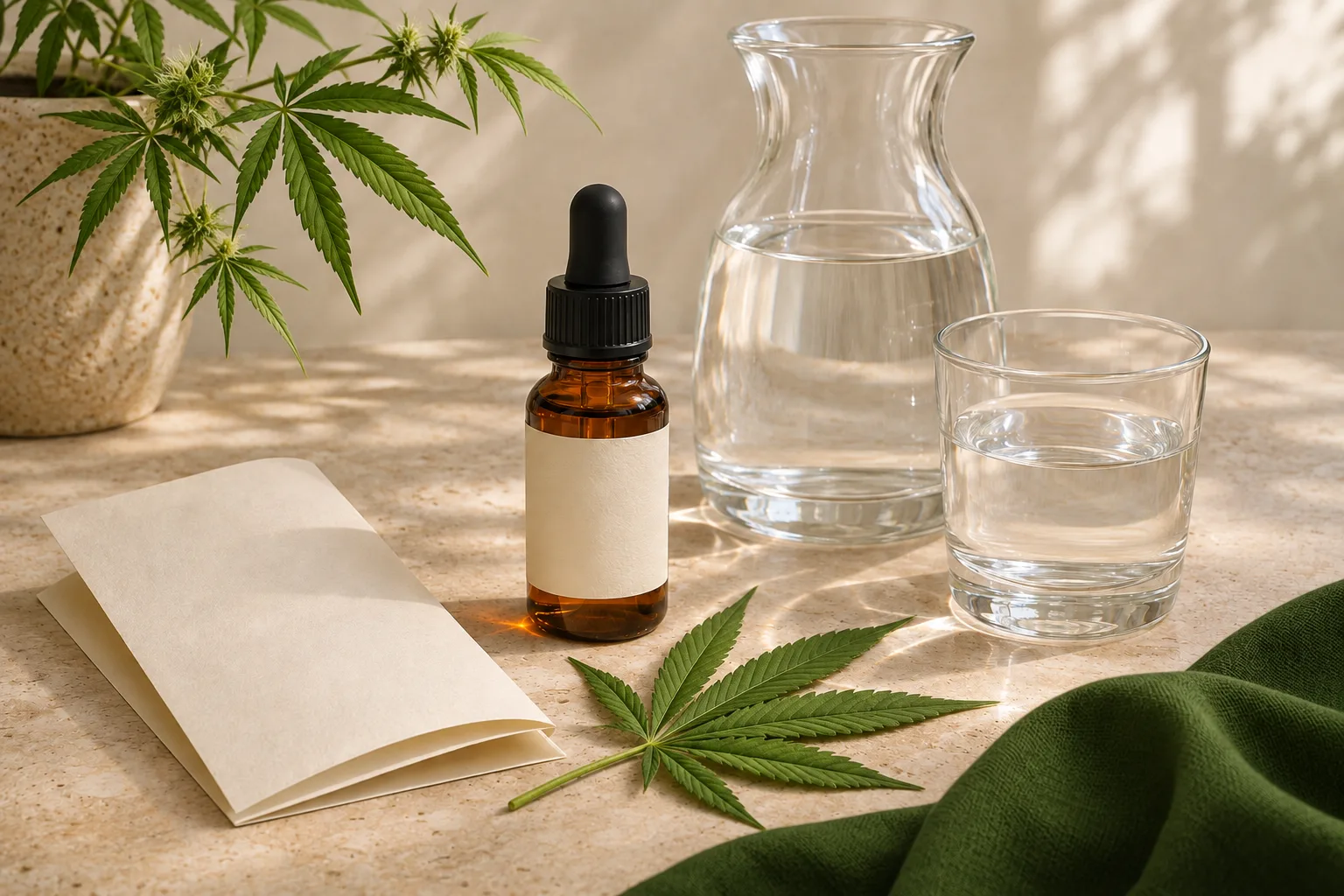
Ask what the product description means
Start with the intended use. Is the bottle a food product designed to be added to a drink, a ready-made drink, or an ingredient supplied for another purpose? Those descriptions are not interchangeable. Check the complete label before assuming that a liquid belongs in a cup or glass.
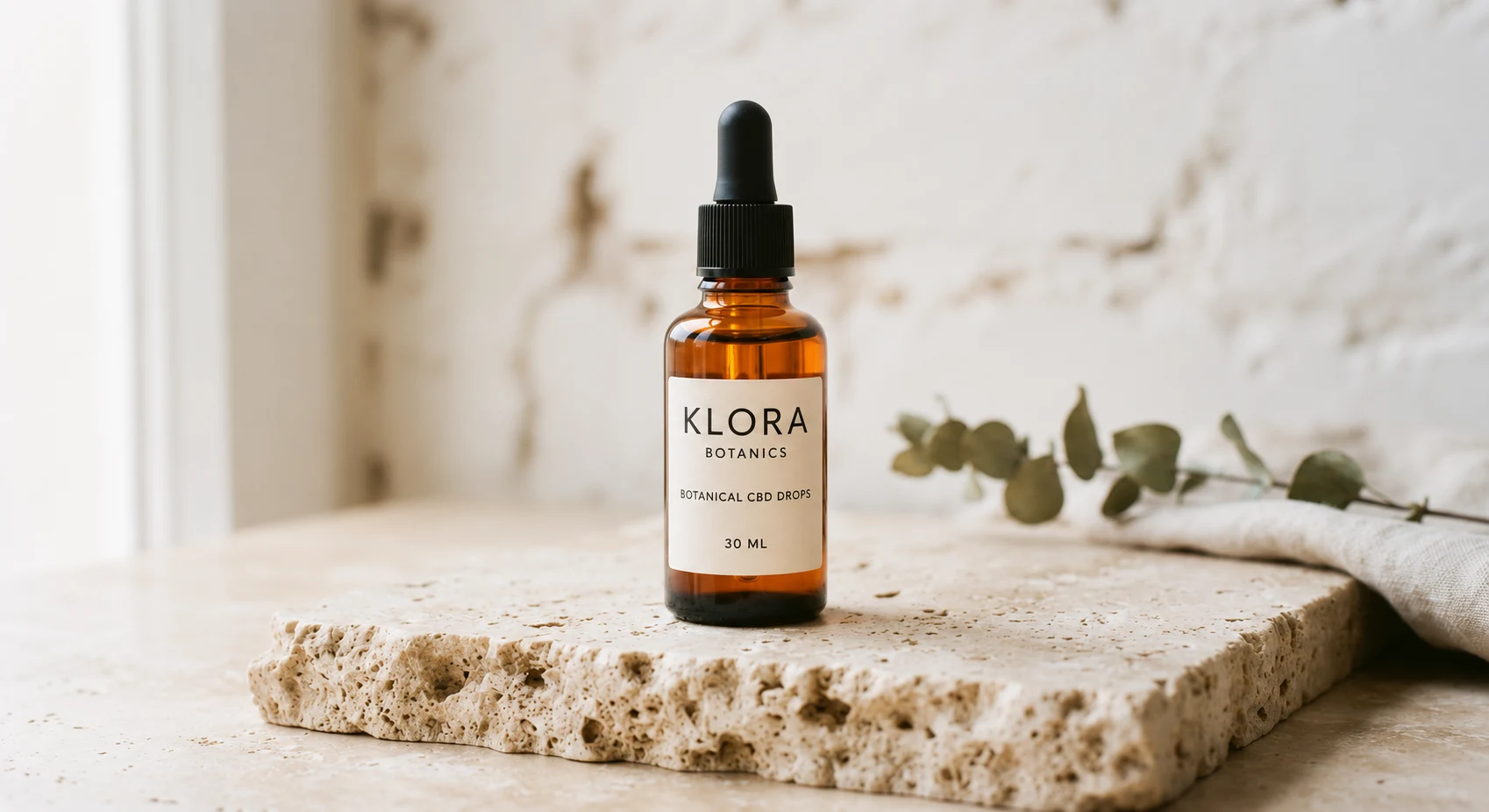
Then look for an explanation of the formulation in plain English. The planned Water-Soluble Botanical Drops in Klora’s own-label range are an emulsion concept intended for drink mixing. The proposed emulsifier system and its stability still require confirmation. That is more specific information than the product name can provide on its own.
Terms such as nano or water-soluble should lead to further questions, not finish the comparison. Ask what the manufacturer means by the term and which evidence supports it for the exact product. Do not read a formulation word as an automatic promise of a particular effect, speed or absorption rate.
Read the complete ingredient list
A mixing product may need more description than a headline CBD ingredient. Look for the full list, including the liquid base and any stated flavourings or other formulation ingredients. Government food-labelling guidance requires ingredients to be listed in weight order, with the main ingredient first.
If a page describes an ingredient system without identifying its components, ask for the finished label. The detail may matter to your preferences or dietary requirements. A technical-sounding description should make the product easier to understand, rather than leave the ordinary ingredient questions unanswered.
Reference: GOV.UK: food ingredient lists (opens in a new tab)
Convert the bottle total into a concentration
For a hypothetical liquid labelled with 120 mg CBD in 30 ml, the stated concentration is 4 mg per ml: 120 divided by 30. A measured 0.5 ml of that liquid would correspond to 2 mg according to the label. This is an arithmetic example, not a suggested amount to use.
Keep the units beside each number. The millilitres describe the liquid measured, while milligrams describe the stated CBD it contains. A bottle can have a large total because it is large, because its concentration is high, or both. Comparing totals alone can hide that distinction.
Check how the supplied dispenser measures volume. Do not assume that a drop from one bottle has the same volume as a drop from another, or borrow a drops-per-millilitre figure from an unrelated product. If measurement is unclear, ask for instructions that match the actual liquid and dispenser.
Read mixing directions as part of the product
Look for clear instructions about the drink type, temperature, mixing method and any need to shake the bottle. Ask whether the directions cover a cold glass of water, a hot drink or both. Do not invent preparation steps simply because a different brand uses them.
The size of the glass does not change the CBD quantity added from a measured amount of product. A larger drink may look like a smaller concentration, but it is still necessary to keep track of the amount added. The quantity in the complete drink and the quantity in a portion are different descriptions.
If the instructions or expected appearance are missing, ask the manufacturer. Visual clarity, cloudiness or a pleasant taste cannot confirm a CBD figure. It is more useful to have a defined preparation method and appropriate records than to judge the liquid by how it looks in water.
Keep the bottle instructions after opening
Check storage, date information and any instructions that apply once the bottle is opened. Keep its original label and measuring device together. If you transfer a preparation into another container, you can lose the link between what was measured and the information needed to identify it.
For the Klora concept, the proposed specification is 300 mg CBD in a 30 ml bottle, or 10 mg per ml. The final formulation, measuring instructions and product evidence still need confirmation. Our preview does not make a comparative absorption claim.
Before making a choice, read the current CBD guidance and match any laboratory document to the exact product. Once the formulation, measurement and preparation are clear, a mixing product can be compared on those concrete particulars rather than on an unexplained technical phrase.
Primary references
Read the original guidance
General information, not personalised medical or legal advice. Product and regulatory details can change. Read the exact product label and current source guidance.