Find the base in the ingredients
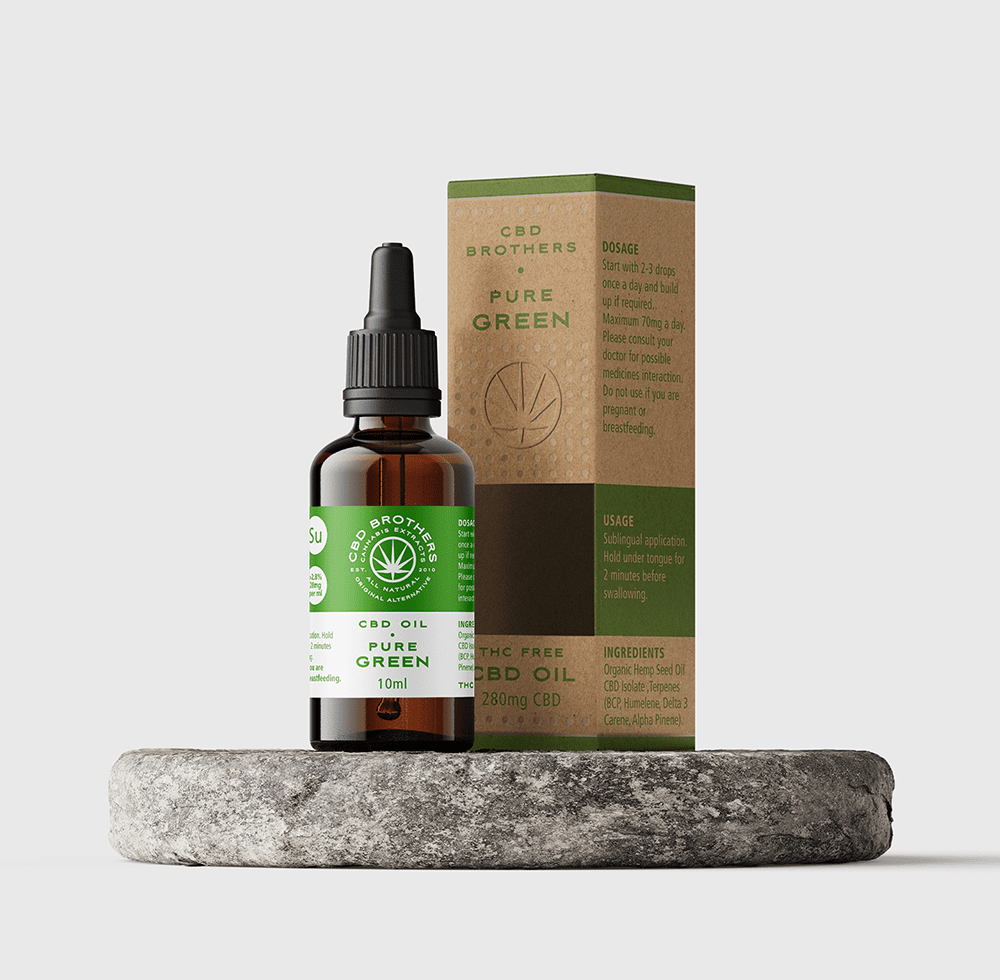
Start with the ingredient list rather than the largest word on the front. GOV.UK explains that food ingredients are listed by weight, with the main ingredient first. A bottle described as CBD oil may therefore begin its recipe with a carrier, followed by an extract or isolate and any flavourings. The CBD amount should be stated separately.
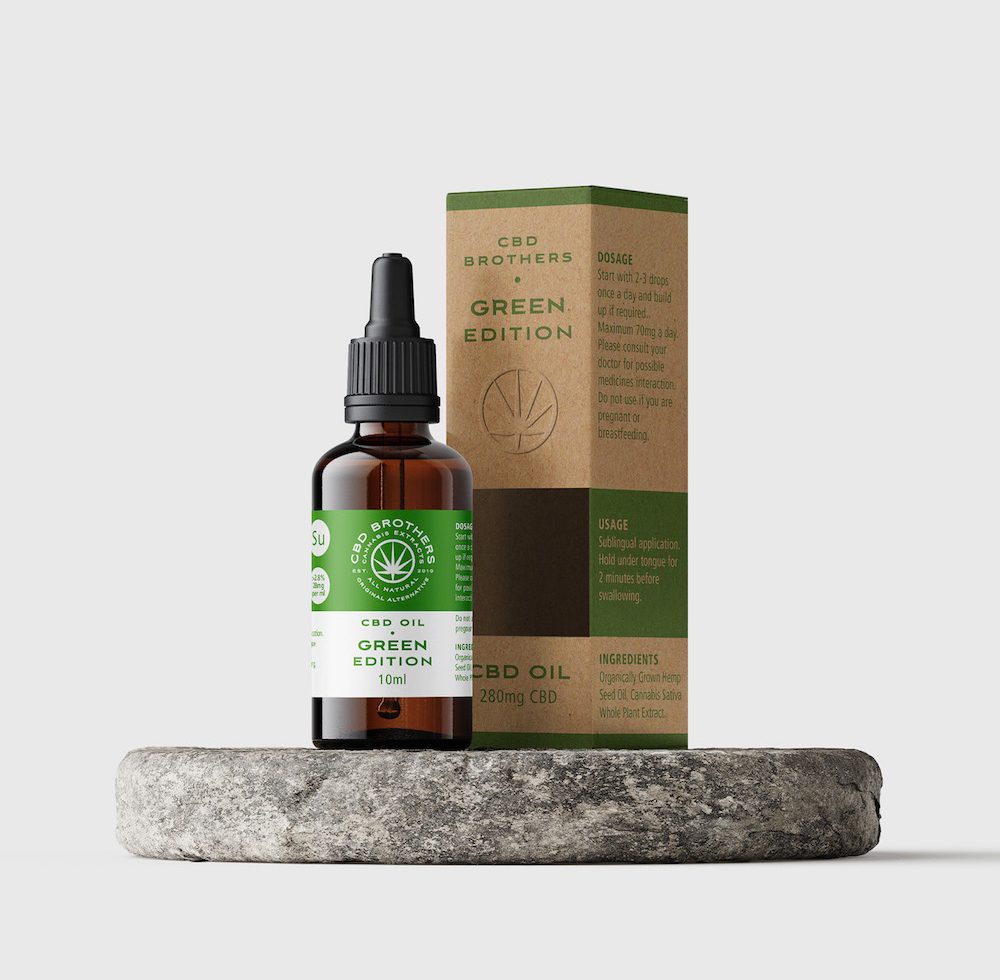
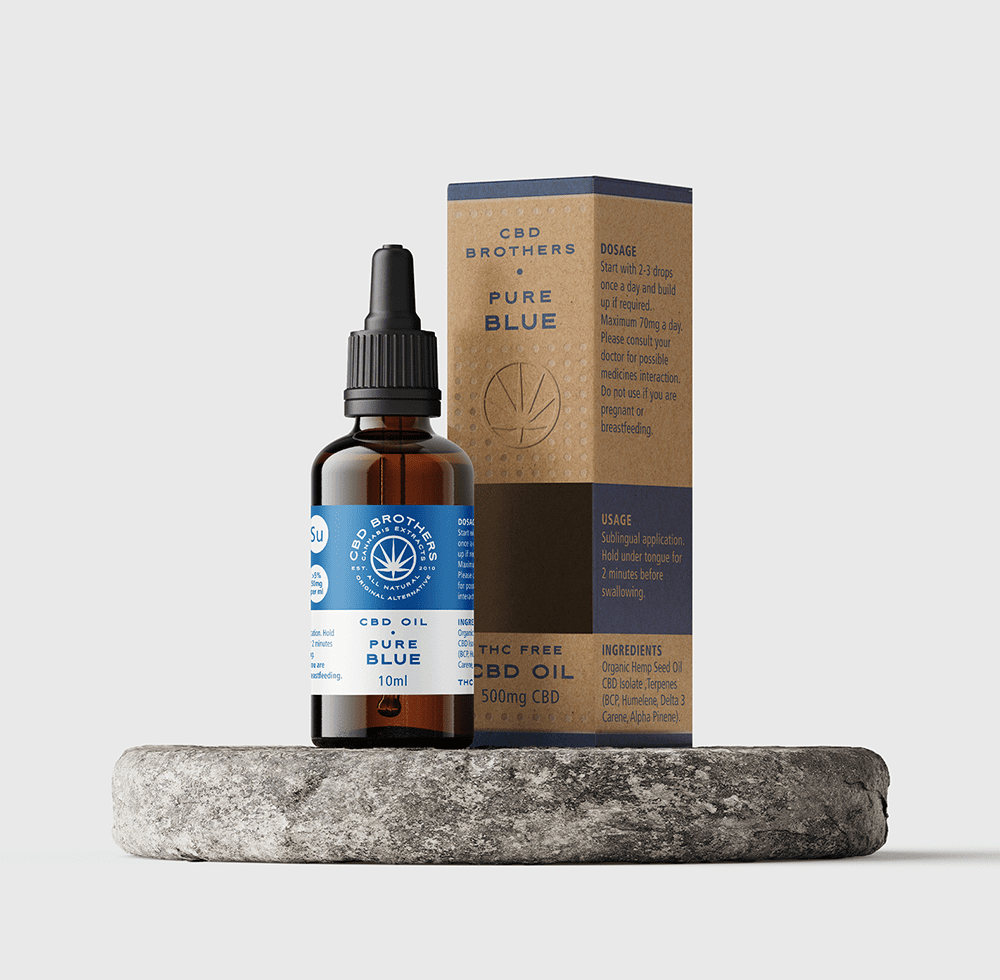
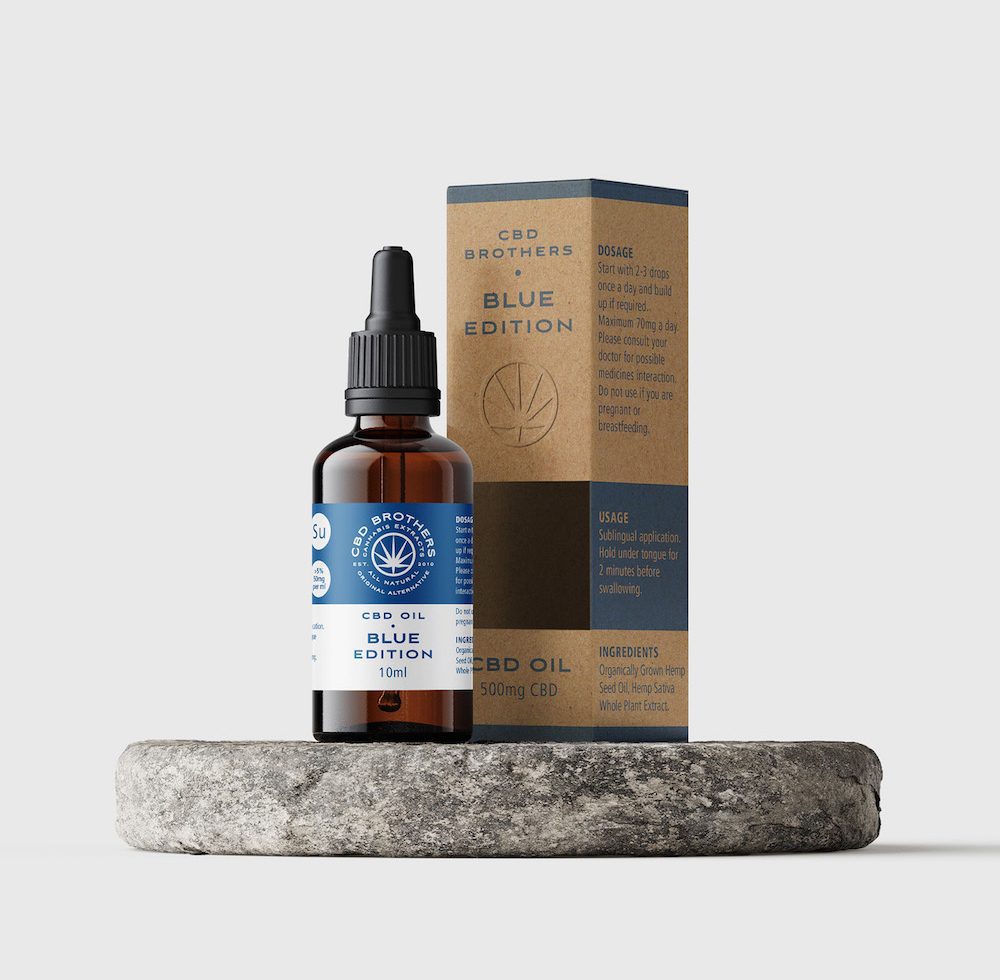
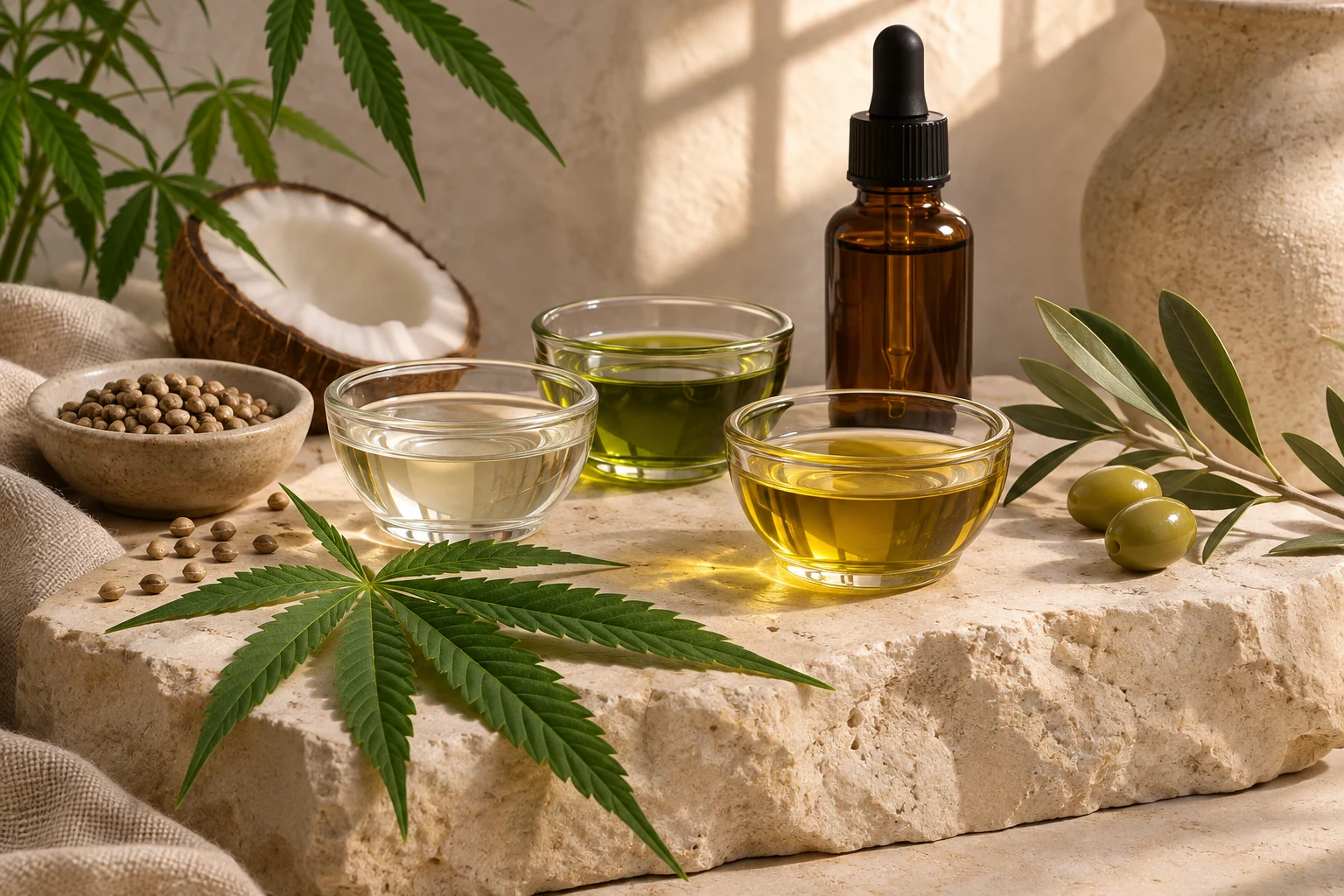
Keep three descriptions apart: the source of the base oil, the description of the CBD ingredient and the finished bottle’s contents. Hemp seed oil can be a carrier in a CBD formula, but a bottle of hemp seed oil without a separately identified CBD ingredient is a different proposition. A plant illustration cannot settle that distinction.
Compare names without ranking them
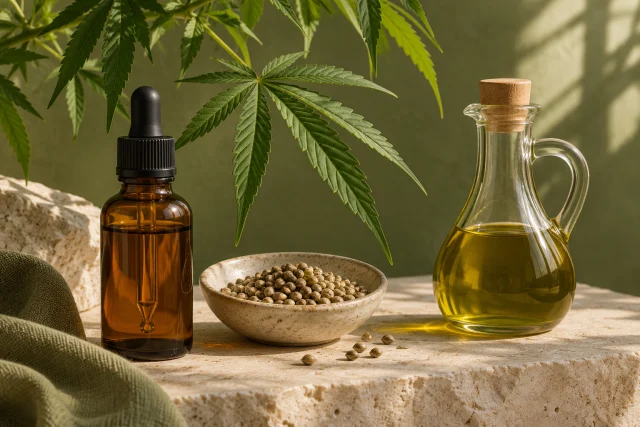
MCT stands for medium-chain triglycerides. A label may name coconut-derived MCT, but do not assume every MCT product has the same source: ask the manufacturer when the origin matters to you. Hemp seed and olive oil identify other possible bases. Their names do not tell you the measured CBD quantity or the quality controls on the finished product.
Use the table as a shopping prompt, not a performance league table. Flavour, appearance and handling can vary between formulations using the same base. A statement about faster absorption or superior health effects needs its own appropriate evidence; it should not be inferred from a familiar ingredient name.
| Labelled base | Useful next check | What the name does not establish |
|---|---|---|
| MCT oil | Which source is declared? | The CBD amount or personal suitability |
| Hemp seed oil | Is CBD listed separately? | That hemp seed oil alone is CBD oil |
| Olive oil | What else is in the formula? | A particular extract spectrum or potency |
Let preference be specific
A preference for an unflavoured product is worth recording in plain terms. Does unflavoured mean no added flavouring, or are you expecting no noticeable taste at all? Those are different expectations. Ask for the complete description, including any botanical flavouring or terpene addition, before deciding that a base will suit your preferences.
The same applies to dietary requirements. A short recipe can be easier to read, but it is not automatically free from allergens or suitable for every diet. If a declared source, processing detail or cross-contact statement matters, obtain information for that exact product. Do not substitute a generic description of the brand.
Compare equal quantities
Write down the labelled CBD total, bottle volume and price before comparing bases. A larger bottle is not necessarily more concentrated, and an expensive carrier does not increase the labelled CBD content. If one seller gives CBD alone and another gives a combined CBD/CBDA figure, preserve those descriptions rather than putting them in one CBD-only calculation.
For an illustrative comparison, 300 mg CBD in 30 ml and 100 mg CBD in 10 ml both describe 10 mg CBD per ml. That arithmetic says nothing about a suitable serving, the taste or the testing record. It simply prevents bottle size and carrier language from distracting you from the units.
Keep the finished product in view
Follow the storage and use instructions for the finished bottle. General advice about a kitchen oil cannot replace directions for a CBD formula containing other ingredients. Keep the carton and batch reference, and ask the supplier if the base or recipe has changed since a previous purchase.
Product selection also starts with suitability. The FSA’s advice about CBD foods applies irrespective of the carrier. Its precautionary limit for healthy adults is 10 mg CBD a day from food and drink combined; it is not a target or a personal dose. An ingredient preference does not remove that guidance.
Carrier oil questions, answered
Is MCT always coconut oil? Do not assume the source from the abbreviation alone. Use the actual ingredient declaration and ask for clarification if it does not answer your question.
Does hemp seed oil add more CBD? Its presence as a carrier does not establish a CBD quantity. Use the separate labelled CBD figure and supporting product information.
Can I choose a carrier by colour? Colour is not a reliable identification method. Read the label, then compare the intended use, complete recipe and batch information for the exact bottle.
Primary references
Read the original guidance
General information, not personalised medical or legal advice. Product and regulatory details can change. Read the exact product label and current source guidance.