Identify what the number describes
Start by reading the words beside the number. Does it describe CBD, hemp extract or a combined CBD/CBDA quantity? Then check whether the figure refers to the whole bottle, one millilitre or another stated portion. A headline percentage without those details cannot tell you the amount in a measured volume.
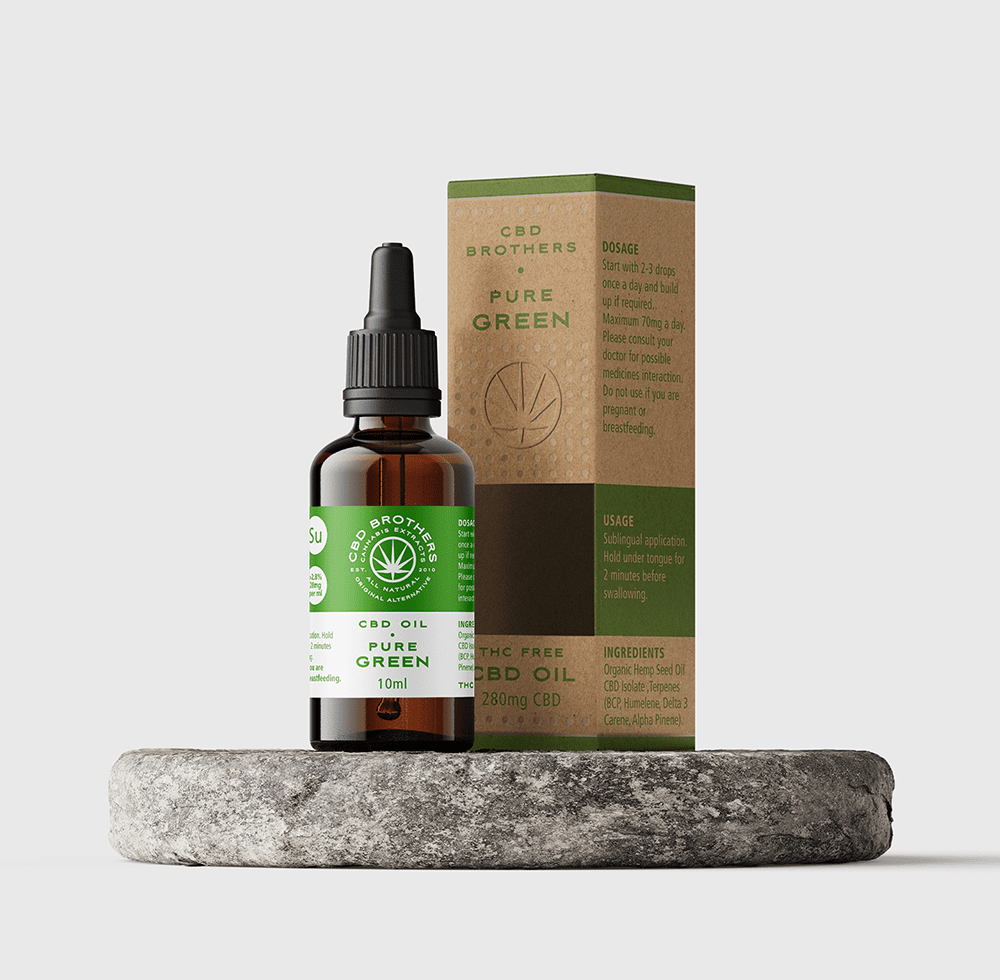
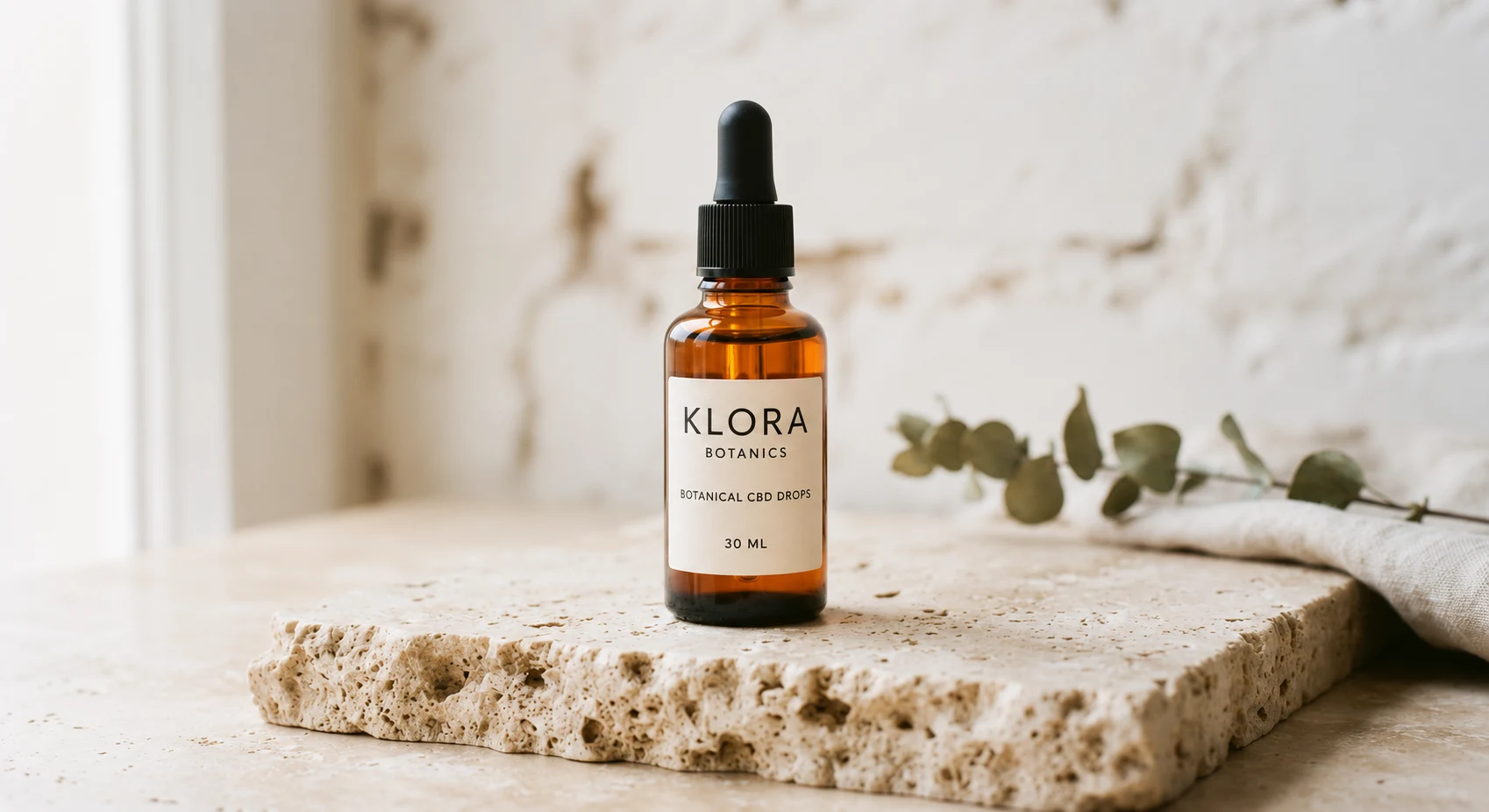
Milligrams are a measure of mass. Millilitres measure liquid volume. A bottle marked 30 ml and 1500 mg CBD gives two different facts: the volume of the contents and the stated total CBD. Neither is a personal serving recommendation, and neither establishes the volume of one drop.
Ask what the percentage is based on
Percentage means a quantity per hundred, but labels may use different bases. A mass-per-volume statement, often written w/v, differs from a mass-per-mass statement, often written w/w. The first relates mass to a stated volume; the second relates one mass to another. Those are not automatically interchangeable for a liquid.
For example, a declaration explicitly stating 5 g CBD per 100 ml corresponds to 50 mg CBD per ml. A statement of 5 g per 100 g describes a mass fraction instead; converting that to a liquid-volume concentration requires additional information. Do not assume an oil has the density of water to make the numbers fit.
| Label wording | What is established |
|---|---|
| 5 g CBD per 100 ml | A stated mass-per-volume basis |
| 5 g CBD per 100 g | A stated mass-per-mass basis |
| 5% with no explanation | The basis needs clarification |
| 1500 mg CBD in 30 ml | A total and volume for mg-per-ml arithmetic |
Use a clear total and volume when available
If the label clearly states total CBD in milligrams and bottle volume in millilitres, divide the total by the volume. A hypothetical bottle stating 1500 mg CBD in 30 ml has a labelled concentration of 50 mg per ml. You do not need to invent a percentage to make that calculation.
To explain the amount in a measured volume, multiply the concentration by that volume. At 50 mg per ml, a hypothetical 0.1 ml amount contains 5 mg CBD. This is an arithmetic example, not a suggestion to take that amount. The product instructions and the accuracy of the measuring device still matter.
Keep laboratory units in context
A laboratory report may express a measurement as mg per gram, mg per millilitre or a percentage with a stated method. Read the sample description and units before comparing it with the retail label. A report on an ingredient cannot simply be read as the concentration of the finished bottle.
Small differences in rounding and a materially different quantity are not the same issue. If the label and report appear to conflict, ask the supplier to explain the sample, units and relevant batch. Do not choose whichever figure produces the preferred price or intake calculation while leaving the discrepancy unresolved.
Turn the figures into a useful comparison
Record the brand, exact variant, named CBD total, volume and calculated mg per ml on one line. Add the price only after those details match. A 10 ml and a 30 ml bottle may share a concentration while containing different total amounts; a larger milligram headline does not settle the comparison.
Keep suitability outside the arithmetic. The FSA advises healthy adults to limit CBD from food to 10 mg per day, not to aim for that figure. Its guidance does not recommend CBD for certain groups unless under medical direction. A correct conversion cannot establish that a product is appropriate for you.
Questions about percentages
Does 10% always mean 1000 mg in 10 ml? Only a clearly defined substance and percentage basis can establish that relationship. An unexplained front-label percentage is insufficient.
Can I use the bottle total without converting to a percentage? Yes, when total CBD and volume are clear, mg per ml can be calculated directly.
Does a percentage tell me how many drops to take? No. Drop volume varies, and a concentration is not a personal dose. Follow the exact product instructions and use the supplied measuring information.
Primary references
Read the original guidance
General information, not personalised medical or legal advice. Product and regulatory details can change. Read the exact product label and current source guidance.