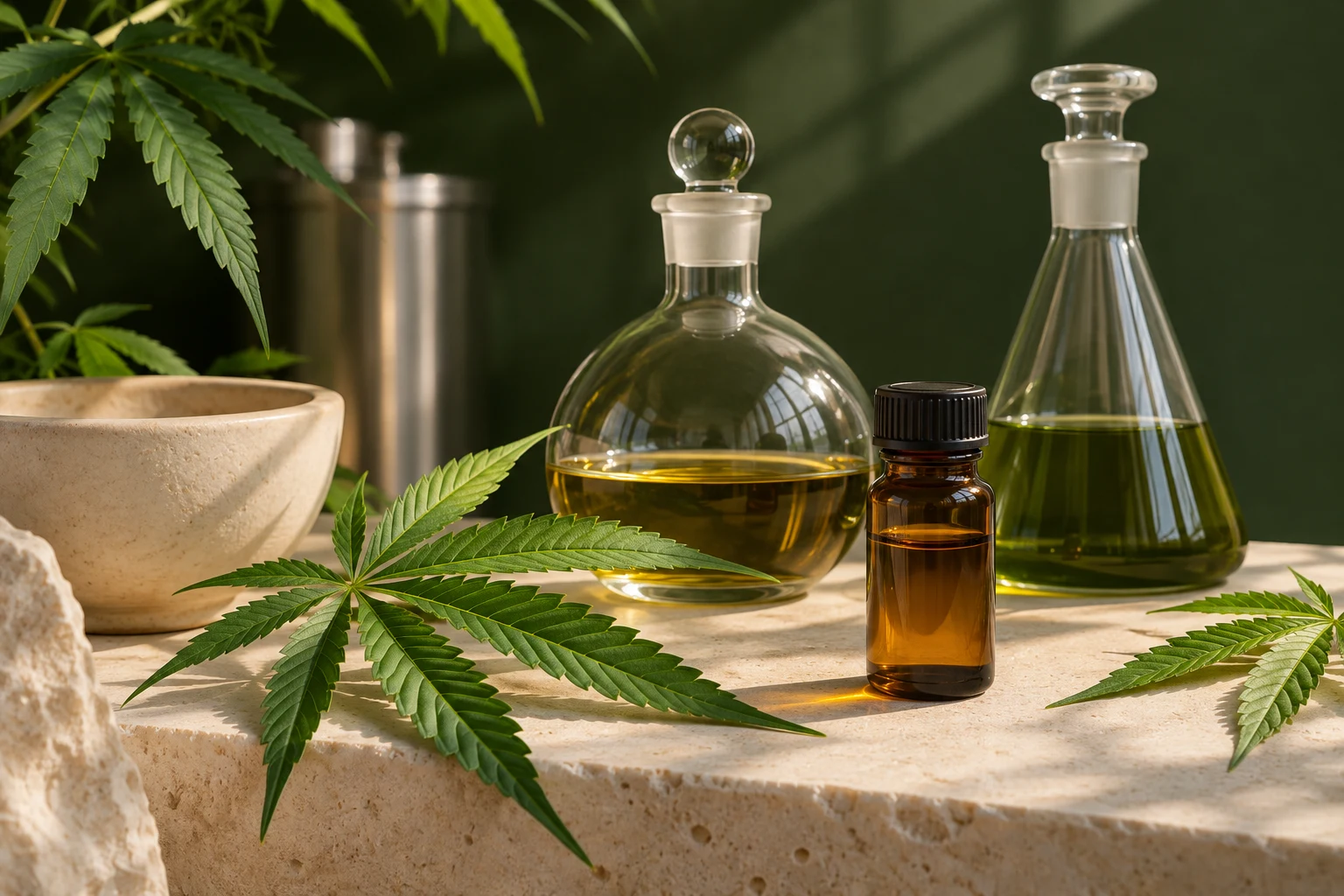
Separate extraction from formulation
Extraction separates selected material from a starting source. Further processing may then alter its composition before it becomes an ingredient in a retail product. Formulation is another stage: that ingredient may be combined with a carrier, flavourings or the other components of a gummy, capsule or cosmetic.
A bottle described as CO2 extracted does not contain only a process. It contains a finished formula with a specific identity and intended use. Start by asking which ingredient the statement describes and whether the seller provides enough information to connect it with the product on the shelf.
Understand the vocabulary at a useful level
CO2 extraction uses carbon dioxide as an extraction medium under controlled manufacturing conditions. Solvent-based processes use a solvent to separate constituents; an ethanol reference may describe extraction or a subsequent processing stage. These are broad process descriptions, not the entire production history, its controls or the specification applied to the resulting ingredient.
Published FSA and FSS safety assessments illustrate why the full process matters: they examine production, composition, specifications and supporting data for particular applications. An example assessment of one applicant’s material should not be treated as a certificate for a different brand using a similar manufacturing word.
| A description you may see | The useful follow-up |
|---|---|
| CO2 extraction | Which ingredient and manufacturing specification does this describe? |
| Ethanol or solvent processing | What controls and relevant residue testing support the material? |
| Purified isolate | What is the ingredient specification and finished-product CBD quantity? |
| Whole-plant extract | Which constituents are actually reported in the finished product? |
Avoid turning the method into a guarantee
Neither a natural-sounding description nor a technical process name proves that a product is safe, free of contaminants or appropriate for a particular person. Those are separate questions. Ask what was tested, what the results show and how they relate to the batch and product being offered.
The same caution applies to terms such as clean, premium and solvent-free. Rather than deciding from the adjective, ask the seller to explain the intended meaning and supporting evidence. A claim about a manufacturing stage should not quietly expand into a guarantee about everything in the finished bottle.
Follow the product through three records
A practical comparison has three reference points: the ingredient description, the finished-product label and the relevant analytical information. They should tell a coherent story about what is being supplied. Keep the product name, concentration and batch reference with any documents you receive.
A cannabinoid-only report does not answer every possible quality question. Likewise, a list of contaminant tests does not establish that the measured CBD content matches the bottle. Read the scope of each document and leave untested matters open rather than assuming that one analysis covers the complete specification.
Keep regulatory status separate
A manufacturing explanation is not market authorisation. The FSA’s CBD guidance explains the novel-food process and distinguishes products linked to applications from formally authorised products. The status needs to be checked for the relevant product and territory, not inferred from a method used somewhere in its supply chain.
When comparing two oils, you can therefore set the process description beside price, ingredients and labelled quantities without making it the deciding badge. A clear answer to an ordinary question is more useful than an impressive process diagram which cannot be connected to the product you would receive.
Extraction questions, answered
Is CO2 extraction always better? The name alone cannot establish that. Compare the specific material, production controls and relevant finished-product evidence.
Does a solvent reference mean solvent is listed as a retail ingredient? Not necessarily: a processing description and an ingredient list serve different purposes. Ask about the exact process and relevant residue controls rather than guessing.
Can I judge extraction by the oil’s colour? No. Colour does not identify the complete manufacturing history or measure CBD content, contaminants or product status.
Primary references
Read the original guidance
General information, not personalised medical or legal advice. Product and regulatory details can change. Read the exact product label and current source guidance.