Ask what the claim means for this product
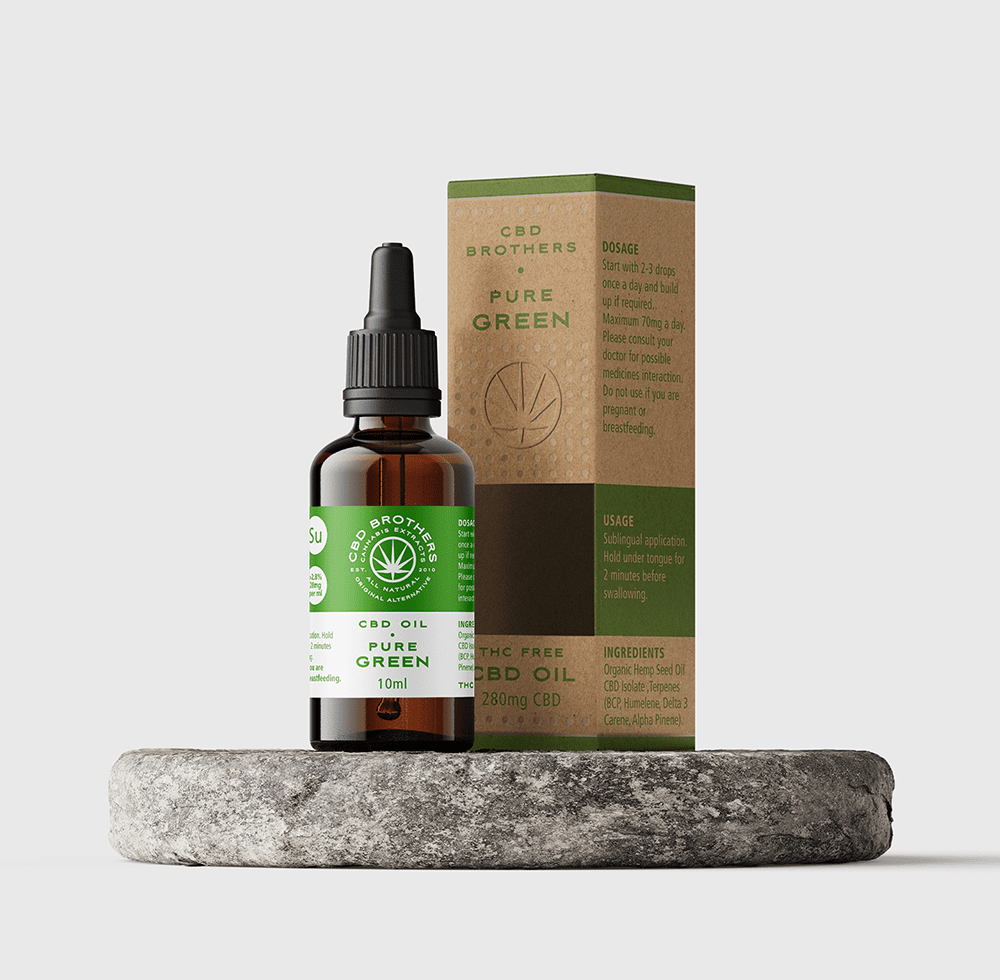
Begin with the seller’s explanation of THC-free. Does it refer to an ingredient specification, a finished-product test or a general range description? Keep the wording attached to the exact concentration, flavour and batch where applicable. A statement covering an isolate ingredient does not automatically describe everything added to the finished formula.
Broad spectrum and isolate are also descriptions that need product-specific evidence. Neither phrase provides a laboratory measurement on its own. Avoid treating several reassuring expressions on the same page as independent proof when they all refer back to one unexamined statement.
Understand what a detection limit tells you
Analytical methods have limits. A report saying a substance was not detected describes the result within that method’s capability for the tested sample. It is not proof that no molecule of the substance exists anywhere in the product. Read the report’s own definitions rather than assigning a universal meaning to an abbreviation.
A limit of detection concerns detecting a substance; a limit of quantification concerns measuring it reliably at the stated level. Laboratories may present their results differently. Check the units and any less-than symbols, then ask the laboratory or supplier to explain unclear notation before converting it into a headline claim.
Match the document to the finished pack
Check the product and sample identification, batch relationship and report date. A document for a raw ingredient, another concentration or an old formulation may answer a different question from the one you have about the bottle in your bag. Ask the seller to explain the connection where it is not apparent.
Also read which cannabinoids were measured. A single line for one form of THC is not necessarily a complete cannabinoid profile. Home Office guidance discusses appropriate testing sensitivity in the context of the product container and relevant controlled cannabinoids. A general badge cannot replace that product-specific assessment.
Keep the complete report with its notes and definitions, rather than a cropped result line. Recording the bottle batch beside the document helps preserve the relationship if you later need to discuss the evidence with the supplier.
| Check | Question to ask |
|---|---|
| Sample | Does this identify the finished product? |
| Batch | How does it relate to the pack I would receive? |
| Method limits | What do the reported limits and units mean? |
| Scope | Which cannabinoids were included in the analysis? |
Avoid simple legal shortcuts
The rules for an industrial hemp crop are not a general retail-product allowance. Likewise, a THC-free description does not by itself establish that a product satisfies food rules, labelling requirements or the controlled-drug framework. Those questions involve the actual finished product and its intended use.
The Home Office explains that pure CBD is not controlled as an isolated substance, while products containing controlled cannabinoids require careful consideration of the applicable rules. This guide does not certify a bottle’s legal status. Read the current official information and seek qualified advice for a legal question.
Do not turn the label into a drug-test guarantee
A retail description or batch report cannot guarantee the outcome of every workplace, sporting or other drug test. The testing context and rules may differ from the product analysis. Do not treat broad spectrum, isolate or THC-free as permission to ignore an employer’s or organisation’s policy.
If testing requirements affect your decision, obtain the relevant policy and qualified guidance before considering a product. Do not experiment with use, timing or a different format to try to evade a test. The useful shopping action is to identify the uncertainty and seek an authoritative answer.
Three questions about the wording
Does not detected mean absolute zero? It describes the tested sample within the stated analytical limits, not an unlimited guarantee.
Does a clear-looking oil contain no THC? Appearance cannot establish cannabinoid composition. The relevant product evidence is needed.
Can one report validate every flavour and strength? Do not assume so. Ask how the document relates to the precise variant and pack being offered.
Primary references
Read the original guidance
General information, not personalised medical or legal advice. Product and regulatory details can change. Read the exact product label and current source guidance.